Neurofeedback for PTSD: What a Major 2024 Meta-Analysis Reveals
If you or someone you care about is living with post-traumatic stress disorder, you already know how deeply it can affect daily life. Intrusive memories, hypervigilance, emotional numbness, sleep disruption, and a constant sense of threat can make even ordinary days feel exhausting. Many people try talk therapy, medication, or trauma-focused
approaches like EMDR and still find that certain symptoms linger.
That is why more clinicians and clients are looking carefully at neurofeedback for PTSD. A significant 2024 systematic review and meta-analysis published in Frontiers in Psychiatry offers some of the clearest evidence yet that this brain-training approach can produce meaningful, lasting relief.
In this post I will walk through what the researchers found, what the results actually mean in everyday language, and how neurofeedback for PTSD can fit into a comprehensive treatment plan.
What Exactly Is Neurofeedback?
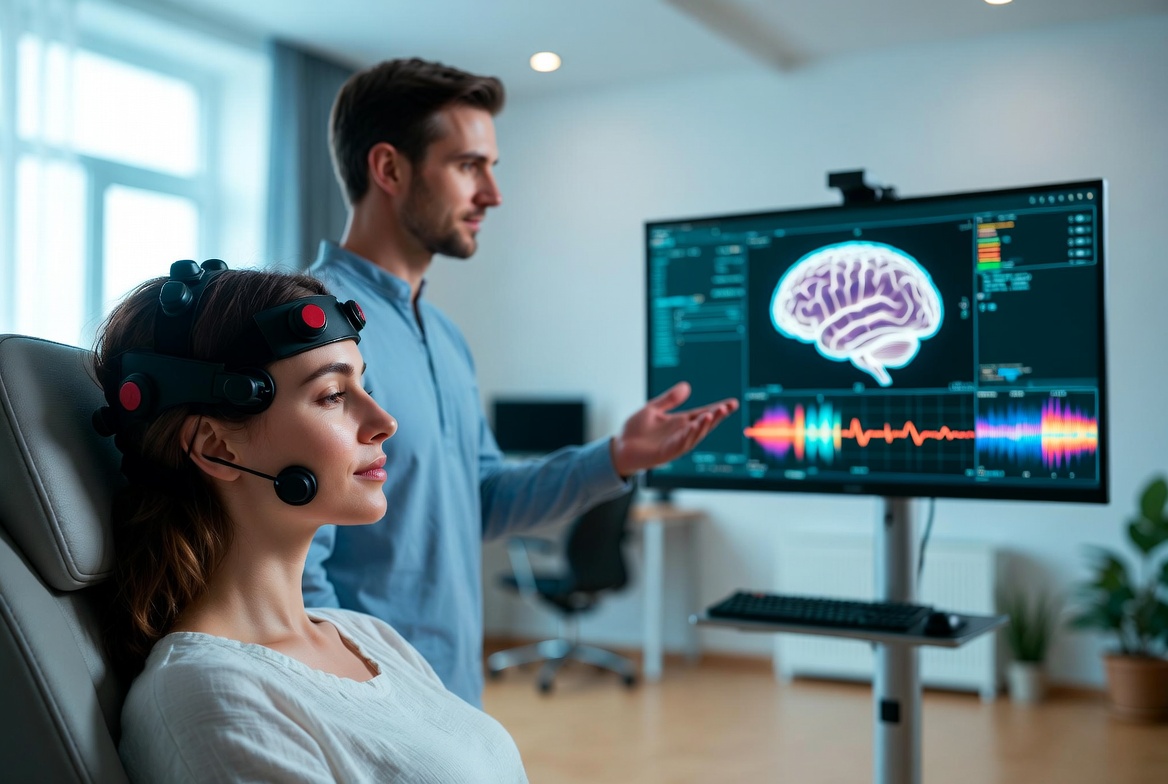
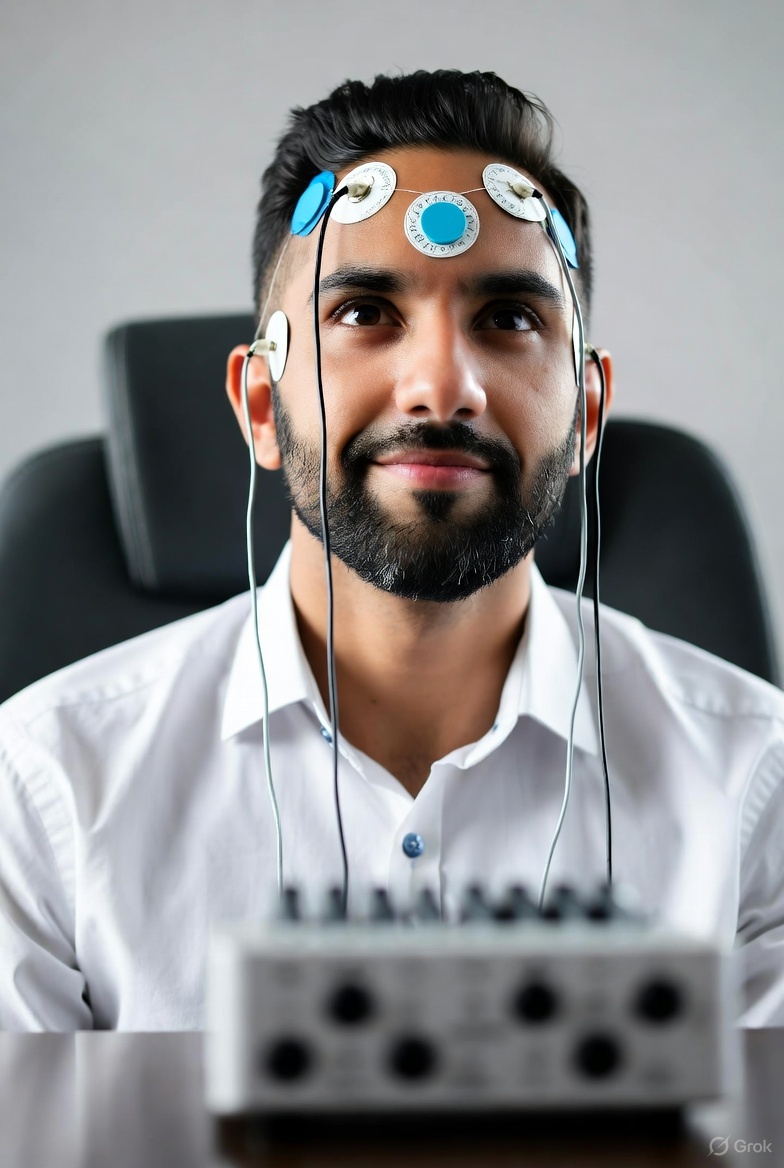
Neurofeedback is a form of brain training that uses real-time feedback from your brain’s electrical activity (usually measured by EEG sensors on the scalp). You sit comfortably and watch a screen or listen to sounds that change according to your brainwave patterns. Over repeated sessions, your brain gradually learns to shift into healthier, more regulated patterns.
Unlike medication, neurofeedback does not introduce chemicals into the body. Unlike traditional talk therapy alone, it works directly with the nervous system’s self-regulation systems. For people with PTSD, the goal is often to calm overactive fear circuits, improve emotional regulation, and restore a greater sense of safety in the body and mind.
This is why interest in neurofeedback for PTSD has grown steadily among trauma therapists.
The 2024 Meta-Analysis: An Important Update
In March 2024, researchers Jeffrey D. Voigt, Michael Mosier, and Ari Tendler published a systematic review and meta-analysis that examined randomized controlled trials of neurofeedback for post-traumatic stress disorder. They identified 17 studies involving a total of 628 patients. Ten of those studies provided data suitable for statistical meta-analysis.
Earlier reviews had been limited by small numbers of studies and focused mainly on traditional EEG neurofeedback. This newer analysis included more recent research and incorporated not only standard EEG approaches but also fMRI neurofeedback and fMRI-informed or fMRI-guided EEG protocols. These newer methods can target deeper brain regions involved in fear and emotion, such as the amygdala.
The researchers compared neurofeedback to various control conditions (active treatments, sham feedback, or wait-list) and measured changes on well-validated PTSD instruments, including the CAPS-5 (Clinician-Administered PTSD Scale), the PCL-5 (PTSD Checklist), and the BDI (Beck Depression Inventory).
Key Findings: Clinically Meaningful Improvements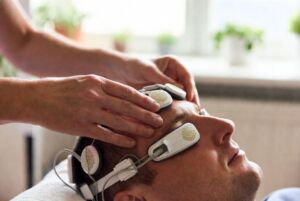
The results favored neurofeedback for PTSD across multiple measures:
- On the CAPS-5, symptom scores improved by an average of 7 points from pre- to post-treatment and by 10 points at follow-up (1–3 months later). Standardized mean differences were 0.74 post-treatment and 0.80 at follow-up.
- On the PCL-5, scores dropped by about 7 points post-treatment and nearly 15 points at follow-up (1–6 months). Effect sizes were 0.47 and 0.67 respectively.
- Depression scores on the BDI also improved significantly, with mean differences of roughly 8–9 points.
Importantly, the benefits were often larger at follow-up than immediately after the final session. This suggests that the brain continues to consolidate the new regulatory patterns after training ends—an encouraging sign for anyone considering neurofeedback for PTSD.
The quality of evidence was rated moderate to high by GRADE standards for the main PTSD outcome measures. Attrition (dropout) was low at about 7.6 percent, and reported adverse events were minimal.
The authors concluded that neurofeedback demonstrates a clinically meaningful effect size that appears driven in part by the newer, deeper-targeting protocols. They recommend considering neurofeedback for PTSD as an adjunctive treatment alongside psychotherapy and/or medication, and they suggest that clinical guidelines and insurance coverage policies should be revisited in light of these findings.
Why Do the Benefits Often Grow After Treatment Ends?
One of the most interesting aspects of this research is the pattern of sustained or increased improvement at follow-up. Traditional symptom-focused therapies sometimes show a gradual fading of gains once sessions stop. With neurofeedback, many participants continued to improve in the weeks and months afterward.
This makes sense from a learning perspective. Neurofeedback is essentially operant conditioning for the brain. Once the nervous system has practiced new patterns of regulation repeatedly, those patterns can become more automatic. The brain keeps refining its self-regulation even after the formal training ends. For people exploring neurofeedback for PTSD, this durability is one of the most hopeful features.
Different Forms of Neurofeedback
The 2024 analysis included several approaches:
- Traditional EEG neurofeedback (the majority of studies)
- fMRI neurofeedback (direct real-time feedback from functional MRI)
- fMRI-informed or fMRI-guided EEG neurofeedback (using imaging insights to refine more accessible EEG protocols)
While advanced imaging methods can target deeper structures with greater precision, high-quality EEG-based neurofeedback for PTSD remains widely available, more affordable, and still shows positive results. In clinical practice, the choice of protocol is individualized based on symptoms, history, and practical considerations.
How Neurofeedback Fits with Other Trauma Therapies
I often integrate neurofeedback for PTSD with other evidence-based approaches. Many of my clients are already doing or have previously done EMDR, somatic therapies, Internal Family Systems (IFS), or cognitive processing work. Neurofeedback can support these therapies by improving the nervous system’s capacity for regulation.
When the brain is less stuck in fight-flight-freeze patterns, clients frequently find it easier to stay present during trauma processing, tolerate emotional intensity, and integrate new insights. In other words, neurofeedback for PTSD does not replace good psychotherapy—it can make psychotherapy more effective for some people.
It can also help with secondary symptoms that commonly accompany PTSD, such as depression, anxiety, sleep problems, and difficulty concentrating.
Who Might Benefit from Neurofeedback for PTSD?
This approach may be especially worth considering if:
- You have tried standard trauma therapies and still experience significant residual symptoms
- Medication has helped only partially or brought unwanted side effects
- You prefer a non-pharmacological option that works directly with brain regulation
- You experience chronic hyperarousal, emotional flooding, or dissociation
- You want a treatment with relatively low dropout rates and minimal reported side effects
Of course, neurofeedback for PTSD is not a magic solution. Results vary from person to person. Some people notice changes within the first few sessions; others require a longer course of training. A thorough assessment helps determine whether it is a good fit.
Realistic Expectations and Limitations
The 2024 meta-analysis is encouraging, yet it is important to stay balanced. Not every study was perfect. Some heterogeneity existed in the data, and cost-effectiveness information remains limited. Most research still involves relatively small sample sizes compared with large pharmaceutical trials.
Neurofeedback for PTSD works best when delivered by a properly trained clinician who understands both the technology and the complexities of trauma. It is rarely a stand-alone cure. The strongest outcomes appear when it is combined thoughtfully with other therapies and lifestyle supports (sleep, movement, social connection, etc.).
Individual factors—trauma history, current life stressors, co-occurring conditions, and engagement with the process—all influence results.
Neurofeedback for PTSD in My Practice
In my San Francisco and Palo Alto offices, I offer neurofeedback as one part of a broader, trauma-informed approach. Sessions are collaborative. We track both brainwave changes and real-life symptoms so that training stays relevant to your goals. Many clients use it alongside EMDR or somatic work; others begin with neurofeedback to build a stronger foundation of regulation before deeper trauma processing.
If you are curious whether neurofeedback for PTSD could help you, the best next step is a conversation. During an initial consultation we can review your history, discuss what the research shows, and determine whether this approach makes sense for your situation.
Final Thoughts
The 2024 meta-analysis by Voigt and colleagues strengthens the case that neurofeedback for PTSD can produce clinically meaningful reductions in symptoms, with benefits that often continue to grow after formal sessions end. Combined with high-quality psychotherapy, it offers a promising, low-side-effect option for many people who have felt stuck.
Living with PTSD does not have to mean accepting permanent limitations. The brain retains remarkable capacity for change throughout life. Neurofeedback for PTSD is one practical way to support that capacity.
If you would like to explore whether this approach fits your needs, I invite you to reach out. You can learn more about neurofeedback on my site or schedule a consultation to talk through the possibilities. Healing is possible, and you do not have to figure it out alone.
Contact me today here:
Together, we can help your brain work with you instead of against you—so you can feel more present, capable, and in control.